

Why Overly Personal Gifts Backfire
Hyper-personal gifts are meant to show how well you know someone. Sometimes they reveal the opposite.

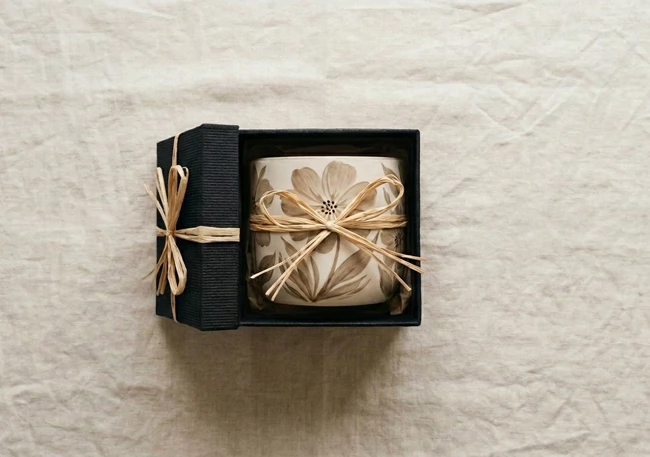
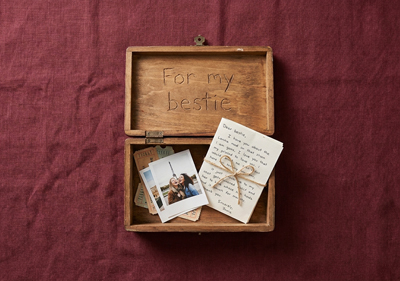
We tend to treat attentiveness as the purest form of care. The partner who remembers the throwaway comment, the friend who tracks down the thing you mentioned wanting once and then forgot about yourself. Movies lean on this. Relationship advice leans on it harder. The ideal gift, the story goes, is proof that someone has been paying very close attention. That’s the whole point. And yet. There’s a particular kind of discomfort that can follow a certain kind of gift. It’s hard to articulate without sounding ungrateful, which is part of what makes it so strange to experience. You open something, and instead of warmth you feel a faint unease. Like a light you didn’t know was on has suddenly been pointed at you.
A friend called me a few years ago trying to work out how she felt about a birthday gift. She’d been seeing someone for maybe two months. He had tracked down a hand-painted ceramic pot, the exact style she’d mentioned wanting for a Monstera she was slowly failing to keep alive on her balcony. She’d said it once, probably while they were walking through a Sunday market, not as a hint, just as a thing she said. He’d remembered it, found something, had it shipped. And she was telling me all this and I kept waiting for the part where she sounded pleased. “That’s sweet though, right?” I said, phrasing it as a question because I genuinely wasn’t sure what she needed from me. She said she knew it was sweet. She just couldn’t figure out why it felt like the opposite of romantic. And she felt, she said, like she’d been followed. Not literally. But the sensation, the sudden awareness that she had been observed so precisely without knowing it, was difficult to shake.
The relationship didn’t last much longer. Not because of the pot. But the pot had revealed something about the dynamic she hadn’t quite clocked before.
That feeling is at the root of why certain deeply personal gifts misfire. The giver thinks they’re demonstrating care. And they are, in a sense. But the recipient becomes aware, all at once, that while they were casually existing, someone else was cataloguing. Taking notes. Building something from the scraps. The asymmetry is sudden and unsettling.
This matters most in relationships without an established emotional register. Newer friendships, early romantic situations, colleagues trying to be kind. In those contexts, people are still working out how much access to offer each other, and a hyper-personal gift can force that negotiation in one direction without warning. One person has decided the relationship is intimate enough for deep emotional investment. The other hasn’t made that call yet. The gift doesn’t just reveal affection. It declares a closeness the recipient may not share and hasn’t agreed to.
Part of what makes this hard to parse is that most people don’t move through the world as fixed, legible selves. They reveal things in pieces, in different doses depending on who’s asking, what the situation is, how the conversation happened to go. There’s comfort in that. You share what feels right in the moment. You get to be known gradually, on your own terms. An overly personal gift can short-circuit that process entirely. Someone has been reading between the lines, connecting dots you scattered casually across different conversations, and has assembled a version of you that you never consciously offered. Even when that version is accurate, being confronted with it feels less like being understood and more like being opened up.
And sometimes, this is the subtler problem, the version isn’t even accurate anymore. People change faster than the people close to them realize. Hobbies get quietly dropped. Old aesthetics start to feel like costumes. Identities that once felt central become embarrassing or just irrelevant. Parents are especially prone to this. They give gifts rooted in a version of their child from ten years ago, gifts that say, without meaning to, I still see you this way, even when the recipient has long since moved on from that person. Friends do it too. Someone who knew you during a particularly fervent phase of your life might give a gift calibrated to that intensity, unaware that you’ve since simplified, softened, changed what you care about.
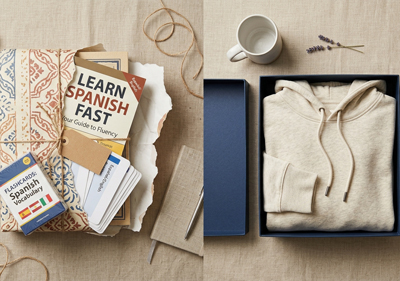
I did this to a close friend a few years ago. During a stretch of our late twenties she was deeply into ceramics. Not casually. She had a studio membership, she talked about glazing techniques at dinner, she gave people mugs she’d thrown herself. It felt like a real thing about her, a defining thing. So when her birthday came around a few years later I bought her a book about Japanese folk pottery traditions. Mingei. Heavy, beautiful, clearly researched. I remember feeling quietly good about myself while I wrapped it.
She opened it, said thank you, and there was something slightly off in her face that I chose not to read. About a week later I found out through someone else that she’d let the studio membership lapse almost two years prior. The ceramics thing had quietly ended around the time she changed jobs. She hadn’t mentioned it because there wasn’t much to say. She’d just stopped. And I’d handed her a 200-page book about an identity she’d already put down. The awkwardness isn’t really about the object. It’s about being reflected back inaccurately by someone who’s certain they’re reflecting you correctly. The giver is proud of their attentiveness. The recipient feels quietly alienated, pinned inside an interpretation that no longer fits, unable to correct it without making everything worse.
There’s something else that doesn’t get examined much. Deeply personal gifts put unusual pressure on the person receiving them. The more visible effort a gift contains, the more the recipient feels obligated to match it emotionally. You can sense the weight of what someone felt while choosing this for you, and you become suddenly responsible for honoring it. A casual gift forgives a casual thank-you. A deeply personal one doesn’t. The recipient has to briefly become an actor, producing a reaction proportional to the investment, whether or not they actually feel it. That’s a strange position to be put in, especially by someone who thinks they’re just being generous.
None of this means personal gifts are the wrong instinct. The impulse is real and often genuinely loving. The problem isn’t usually the attention itself, attention is essential to picking good gifts. It’s what that attention signals, and whether the relationship is actually equipped to carry it. Thoughtfulness and intimacy aren’t the same thing. You can be thoughtful in a way that leaves room, that gives the recipient something to grow into. Or you can be thoughtful in a way that closes things off, that says, I’ve already figured you out, and leaves nowhere to go.
The gifts that tend to work best have a slightly looser grip. They make someone feel recognized without making them feel mapped. There’s a real difference between a gift that says I noticed you love mornings and one that reconstructs your entire inner world from ambient data, the café order, the notebook brand, the podcast mentioned in passing once. The first feels like warmth. The second feels like a dossier.
It’s not about scale or effort, exactly. It’s about reading how much of themselves someone is ready to have handed back to them. That requires a restraint that most gift-giving advice actively discourages. We’re told the goal is to prove you’ve been listening, that the best gifts are always the most specific. But listening and surveilling are closer than people like to admit. What separates them is usually whether the listener understood where the relationship’s edges actually were.
Most people want to be known. Just not all at once, and not by someone who got there without them noticing. The moment a gift makes someone feel exposed rather than seen, the gesture tips. It stops feeling like generosity. It starts feeling like something you can’t quite name, something that looks identical from the outside but lands completely differently from within.

Dattaraj Pai
I’m the founder of Science of Gifts, a website dedicated to helping people find meaningful and thoughtful gifts. With years of experience researching the psychology of gift-giving, I explore how gifts communicate emotions, strengthen relationships, and create lasting memories.
Beyond writing about gifts, I have a background in storytelling and filmmaking, which fuels my passion for exploring the cultural impact of meaningful gestures.