

The Case for Upgrading Everyday Items as Gifts
Most gifts get forgotten. Upgraded everyday items don’t. Explore the psychology behind practical gifts that quietly improve daily life.

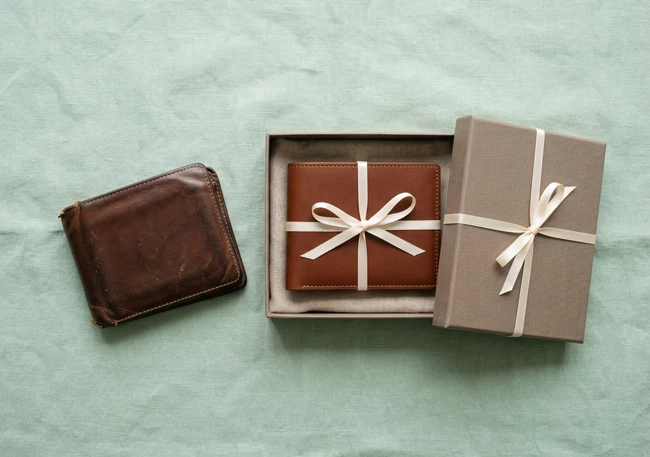
Some gifts land with a lot of noise. You open them, react instantly, maybe even overreact a little because the moment asks for it. And then there are the other kinds. The ones that don’t seem like much at first, but keep showing up in your day until you realize they’ve quietly made things better. I didn’t think much of this category until my sister gave me a wallet. My old one wasn’t terrible. It just looked tired, edges peeling slightly, cards crammed in a way that made it bulge awkwardly. I had used it for years and, like most people, hadn’t really thought about it.
When I opened the new one, my reaction was polite. It’s just a wallet, after all. But a week later I noticed how it sat flatter in my pocket. A month later it hit me that I hadn’t once adjusted it or fought to get a card out. That delayed appreciation is typical. Upgrades rarely impress immediately. They grow on you.
There’s a reason this works, and it has less to do with generosity and more to do with how people actually live. Most of us run on habits. We drink coffee from the same mug every morning, wear the same rotation of clothes, carry the same bag until it gives up. Behavioral research has shown that a large portion of daily actions are automatic, almost scripted. The brain prefers it that way. Less effort, fewer decisions.
When you give someone something entirely new, you’re asking them to change that script. Try this instead. Use this. Remember this exists. That’s friction, even if it’s small. And friction, as studies in habit formation often point out, is where good intentions fade out. But when you upgrade something they already use, you’re not asking for change. You’re slipping into an existing routine. The new item inherits the habit. No convincing required.
There’s also something slightly more human going on. People are surprisingly bad at upgrading their own everyday items. Not because they don’t care, but because they normalize small inconveniences. The slightly broken zipper. The scratchy bedsheet. The pen that skips but still writes if you angle it just right. You adapt, and then you stop noticing.
Psychologists sometimes refer to this as hedonic adaptation, the tendency to get used to both good and bad conditions over time. It explains why people stop appreciating upgrades they buy for themselves. But it also explains why they don’t fix minor annoyances. If you’ve already adapted, it doesn’t feel urgent. That’s where a gift can interrupt things in a useful way. It resets the baseline.
There’s research on this too. Studies on experiential versus material gifts often show that people value things that improve daily life over time, not just in the moment. 1
An upgraded object becomes part of repeated experiences. Each use is a small reminder. Not dramatic, but consistent. And consistency has a way of compounding into something meaningful.
There’s also the subtle signal behind the gift. When you upgrade something specific, you’re demonstrating attention. You noticed what they use. You noticed its condition. You didn’t just pick something from a generic list. In social psychology, this falls under perceived responsiveness, the idea that feeling understood and seen strengthens relationships.
It doesn’t require grand gestures. In fact, it works better when it’s grounded in ordinary details. A better version of their favorite notebook. A softer, heavier hoodie. A water bottle that actually keeps water cold past noon. These are not impressive on paper. But they carry a quiet kind of precision.
There’s a slight risk, of course. If you misread the item, or upgrade something too personal, it can feel off. Clothing is the obvious example. You need to know what to look for. Size, fit, style. Get it wrong and it doesn’t matter how good the fabric is. The friction returns. But when it works, it works unusually well because it blends into the person’s life without effort. There’s also an interesting asymmetry here. People are often reluctant to spend more on themselves for everyday items. They’ll justify it away. This is fine. It still works. I’ll replace it later. But receiving that same upgrade as a gift bypasses that internal negotiation. It feels allowed.
Economists sometimes frame this as mental accounting. People categorize spending differently depending on the source. Money spent by others, or received as a gift, is treated less strictly. So the “better version” that might have felt unnecessary when self-funded feels acceptable, even appreciated, when gifted.
And then there’s the comfort factor. New things, especially novel ones, come with a small cognitive load. You have to learn them, integrate them, remember them. Upgrades don’t. They offer improvement without learning. Familiar, but refined. It’s a bit like improving the lighting in a room you’ve lived in for years. Nothing changes structurally. But suddenly everything feels easier to see.
If there’s a mistake people make with this kind of gift, it’s thinking the upgrade has to be dramatic. It doesn’t. In fact, if it’s too dramatic, it stops being an upgrade and starts being a replacement. The goal isn’t to surprise with novelty. It’s to improve with accuracy. Although it doesn’t have to be boring. You can always make gifts fun in small ways, such as giving a Civil War history buff a well designed bottle with an American Civil War inspired design instead of a plain one. They will appriciate the upgrade and the thought.
There’s also a temptation to over-explain. To point out why the new version is better, what makes it premium, how it compares. But most of the time, that explanation isn’t necessary. The difference reveals itself through use. And when it does, it feels discovered, not imposed. That discovery matters. There’s a small sense of ownership in realizing something is better on your own.
I think about this whenever I replace something I use daily. Not in a big, life-changing way. Just small shifts. A pen that writes smoothly every time. A pillow that doesn’t need constant flipping. A bag that doesn’t dig into your shoulder after ten minutes. None of these are exciting purchases. But they quietly remove friction from everyday life. And that’s really what an upgrade does. It reduces friction in places people have stopped noticing.
There’s something almost generous about that. Not in a loud way. In a way that says, I noticed this part of your life and thought it could be a little easier. It doesn’t create a moment. It improves many small ones.
And those tend to last longer.

Article Sources
1. Weidman, Aaron C., and Elizabeth W. Dunn. The unsung benefits of material things: Material purchases provide more frequent momentary happiness than experiential purchases. Social Psychological and Personality Science 7.4 (2016): 390-399.

Dattaraj Pai
I’m the founder of Science of Gifts, a website dedicated to helping people find meaningful and thoughtful gifts. With years of experience researching the psychology of gift-giving, I explore how gifts communicate emotions, strengthen relationships, and create lasting memories.
Beyond writing about gifts, I have a background in storytelling and filmmaking, which fuels my passion for exploring the cultural impact of meaningful gestures.