

The Best Gifts for History Buffs
Most history gifts look right and get forgotten. This guide focuses on what actually sticks, from daily-use pieces to objects that quietly change a room.

 Contents
Some of the links on this website are affiliate links, meaning I may earn a commission if you make a purchase through those links, at no additional cost to you.
Most people, when buying for a history buff, focus on the subject. Something Roman, something medieval, something tied to a specific era, and that’s usually where it ends. What gets missed is how that person actually relates to history. Not as a topic, but as a lens. The gifts that work tend to fit into that lens without announcing themselves.
What people end up keeping isn’t always what you’d expect. A well-made object with no place in daily life gets shifted around, admired briefly, then forgotten. But something that fits into a routine, a morning coffee, a desk, a shelf they actually look at, sticks. Not because it’s impressive, but because it’s present.
This list leans into that difference. Some of these will get used every day. Some are more intentional, marking a specific interest or moment. Others sit quietly in the background, the way a good map or an old print does. None of these approaches is better than the others. The difference is simply in what role the gift ends up playing.
#1 The Best Overall

Quick Picks
- Best for unwinding with something meaningful
- Best subtle, everyday wearable
- Best for readers who prefer firsthand history
- Best visual, idea-driven design
- Best hands-on history experience
- Best identity piece they'll keep reaching for
- Best light, inside-joke gift
- Best functional design with a subtle idea
- Best collectible-style display piece
- Best for a deeper, big-picture view
GIFTS UNDER $25
A lower budget doesn’t mean settling. The picks here work because they’re specific, not because they’re cheap. Effort matters more than the price tag. A well-chosen $20 object beats a forgettable $60 one almost every time.
For the history buff who enjoys winding down with something meaningful

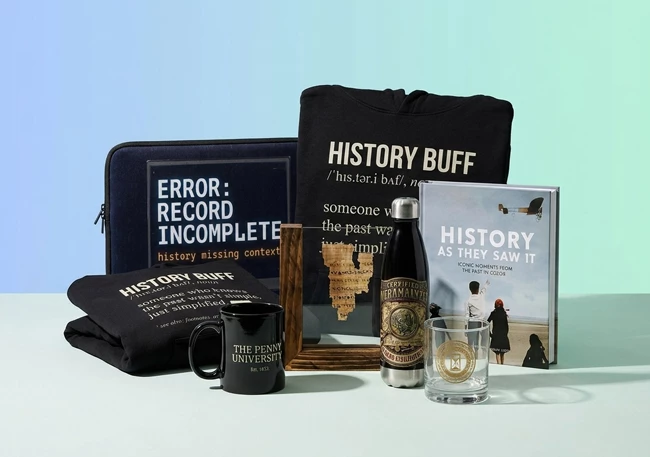
A clean, weighty rock glass with a subtle history-inspired design that feels more like everyday drinkware than novelty.
Most history-themed gifts are really just décor in disguise. They look right on a shelf and stay there. This one actually gets used.
The glass itself is a classic rocks style, well-weighted, the kind that feels right in the hand rather than ornamental. The engraving is what sets it apart: “Historia Magistra Vitae,” Cicero’s line about history as a teacher, framed in a medallion with an hourglass and laurel. It’s specific without being obscure. A history person will recognize it immediately. Everyone else just sees something that looks considered.
That balance is rare. Most themed glassware leans novelty, something funny or ironic that wears out quickly. This feels closer to an object someone reaches for without thinking, part of a slow evening, a book nearby, a habit forming around it. It works best for someone who takes their interest seriously but doesn’t need to broadcast it. The reference is there for them, not for anyone else.
For the history enthusiast who loves his coffee

A simple, everyday t-shirt that signals interest in history without relying on loud graphics or obvious references.
The reference does most of the work here. In 17th-century England, coffeehouses charged a penny for entry and unlimited coffee. What developed inside them was harder to price: open debate, news, ideas moving between people who otherwise wouldn’t have shared a table. They came to be called penny universities, and the name stuck long after the coffeehouses faded. Put that on a mug and it becomes something else. Not just text, but a small piece of intellectual history that shows up every morning without needing attention.
The design holds that tone. Black ceramic, clean serif type, “Est. 1652.” Nothing extra. It reads like something you’d find in a museum shop that knows when to stop. Most mugs lean on humor and wear out quickly. This one doesn’t need to. The minimalist design makes it feel premium.
Best for someone whose interest in history runs through ideas more than artifacts. The kind of person who reads, takes notes, and connects things across time. They’ll recognize it immediately, which is enough.
For the history buffs who loves books

A collection of primary accounts that brings historical moments closer to how they were experienced, not just retold.
Black and white does something to historical photographs. It creates distance. The people in them stop feeling immediate and start feeling like subjects, fixed in the past. Color changes that.
History as They Saw It by Wolfgang Wild and Jordan Lloyd restores and colorizes historical photographs with enough care that it doesn’t read as a gimmick. It feels closer to a correction. A crowd watching the Wright Brothers’ first flight. Street scenes from cities that no longer exist in any recognizable form. Faces with real skin tones and clothing, suddenly present instead of archival. The distance drops away.
For someone who already knows these images, that shift lands differently. It replaces some of the imaginative work with something more direct, and does it well enough that it tends to stop people mid-flip. It’s the kind of book gift that stays within reach. Picked up, passed around, returned to without much thought. Not for display, but because it holds attention.
A practical gift that becomes part of their daily routine

A timeline-inspired design that turns a familiar concept into something visual and wearable.
Most history-themed clothing misses the tone. It either leans into novelty, jokes that wear out quickly, or goes so subtle it disappears. You have to be considerate when picking clothing gifts. This lands in a better place: it’s clearly a joke, but one that assumes you know what you’re looking at.
“BC/AD. Currently Reading About Both.” The design has enough going on to reward a second look, hourglasses, Roman numerals, a timeline woven into the layout, but it stays readable. The cream colorway helps. It feels like something you’d actually wear, not something you put on once to make a point.
This works best for someone who’s comfortable being a little visible about their interests. The kind of person who doesn’t mind the reference being noticed, and maybe even appreciated. What makes it work as a gift is that it matches not just the interest, but the way they express it. That’s usually where the difference shows.
Suggested
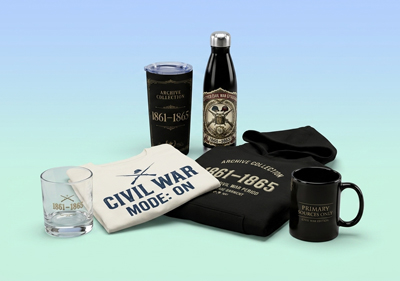
The Best Gifts for American Civil War History Buffs
Find the best Civil War gifts for history lovers, including unique collectibles, books, and practical items...
For the history loving foodie or cook

A cookbook that brings history into the present through recipes tied to different time periods.
Most history books ask you to read about the past. This one asks you to make it for dinner. Tasting History by Max Miller spans 4,000 years of recipes, from ancient Mesopotamia to medieval Europe, each drawn from primary sources and placed in context. A Roman fish sauce sits alongside the trade routes that made it possible. It makes a simple point well: what people ate often says as much as what they built or fought over.
It works in two ways. For someone who cooks, it becomes a book they return to, trying out a Byzantine stew or a Tudor pudding with more context than a typical cookbook offers. For someone who doesn’t, it still reads like a history book that happens to be organized around food.
This is for the person who prefers history they can engage with, not just read. The kind of interest that shows up in small experiments, not just notes in the margins. For that person, it tends to stick.
GIFTS UNDER $50
This is the range where most good gift decisions happen. Enough room to go specific, not so much that the choice becomes precious. The picks here suit someone you know reasonably well, or someone you want to impress without overthinking it.
The hoodie that feels more like identity than merch

A comfortable hoodie with a definition-style design that frames history as something interpreted, not just remembered.
The line does most of the work: “someone who knows the past wasn’t simple, just simplified.” It’s not a broad joke. It’s a specific frustration, the way complex periods get reduced into clean narratives. Anyone who has spent time with history recognizes it immediately. The “see also: footnotes, archives, lost context” underneath is what pushes it further. It’s too specific to feel like generic merchandise.
Dictionary-style clothing is familiar, but the writing here carries it. There’s a clear point of view behind it, and that tends to matter more than the format. The black hoodie helps. It keeps the whole thing grounded, something your recipient wear without thinking rather than something you put on to make a statement. The weight and tone match the idea, which is easy to overlook but noticeable when it’s right.
This works for someone who sees themselves in that line. They won’t need it explained, and that’s where it lands.
For the history buff who appreciates thoughtful humor

A water bottle that leans into the analytical side of history with a slightly self-aware tone.
“Certified Overanalyzer of Dead Civilizations” is a very specific kind of joke. It’s not about history itself, but about the mindset that can’t leave it alone, the impulse to keep pulling at a thread long after everyone else has moved on. The person who finds it funny will recognize it immediately.
The illustration carries that idea. A skeleton hunched over ruins with a magnifying glass, framed in a vintage cartographic label. It has enough detail to feel considered without becoming busy, more like something lifted from an old archive than designed for a quick laugh. And then it’s a water bottle, which means it goes everywhere. A desk, a bag, a library table. It turns into a daily object that also happens to say something accurate about the person carrying it. Possibly an upgrade from their old boring water bottle.
This works best for someone who’s comfortable being a little self-aware about their interest. The kind of person who takes it seriously, but not too seriously.
Suggested
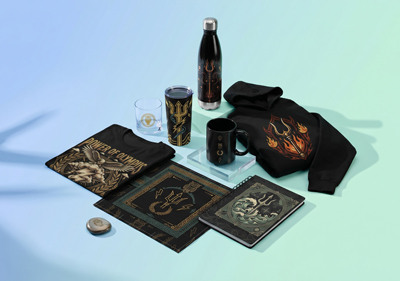
The Best Greek Gods Gifts
Best Greek gods gifts and gift ideas for Greek mythology lovers, from hoodies and mugs to unique, practical...
For the history lover who prefers subtle, modern references

A clean sleeve that carries a quiet idea about history without making it the focal point.
The joke works because it’s true. At some point, the record just stops. A source disappears, a library burns, a dynasty leaves little behind. What survives is partial, and often filtered. “Error: Record Incomplete. History missing context.” It reads like a system message, but it’s closer to a condition of the discipline.
Framing it as a terminal screen is what makes it distinct. It avoids the usual historical cues, no parchment, no classical motifs, and instead uses a cold, digital language to describe something ancient and fragmented. The contrast does the work.
As a laptop sleeve, it becomes one of the more practical items here. It protects something valuable, travels constantly, and carries a design that holds up to repeated use. It’s something the owner sees every day without it asking for attention. This works for someone who’s comfortable with the gaps in the record, and maybe even drawn to them. The idea lands without needing explanation.
GIFTS OVER $50
These are the gifts that require knowing someone, or at least being willing to commit to an impression of them. The price isn’t the point. What changes at this range is the weight of the object, the kind of thing that sits on a desk for years rather than migrating to a drawer.
For the standout gift that feels like part of a collection

A detailed replica that gives a tangible sense of historical artifacts without needing a museum visit.
There’s a particular kind of object that doesn’t demand attention but changes a room by being in it. This is one of them.
The fragment is a reproduction of a Greek papyrus, 2nd century CE, mounted between glass panels in a walnut stand with a small brass identification plate at the base. The presentation feels closer to a museum display than a typical gift object. It doesn’t try to signal importance. It just sits there, visibly old, visibly incomplete. That incompleteness is the point. What survives from the ancient world is partial by nature, and a fragment reflects that honestly. For someone who spends time with history, that’s not a flaw. It’s what makes the object worth looking at in the first place.
It fits into quiet spaces. A desk, a shelf, somewhere it gets noticed in passing. Recipients tend to prefer gifts they can display. And a true history buff would be proud to show off this one.
Suggested
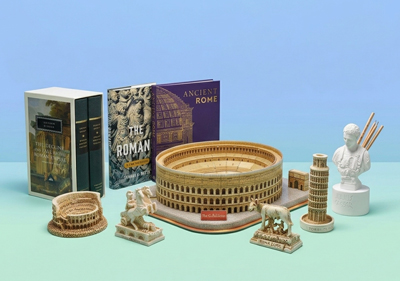
The Best Gifts for Roman History Enthusiasts
Looking for gifts for Roman history buffs? From Latin phrase hoodies to ancient fresco laptop sleeves and f...
For the history buff who enjoys seeing the bigger picture

A curated look at presidential elections through original reporting and archival material.
There’s a difference between reading about an election and reading the newspaper from the morning after it happened. Analysis knows what followed. A front page doesn’t. It captures the moment as it was understood at the time, with all the certainty and uncertainty still intact.
This New York Times collection gathers original front pages from presidential elections across the 20th century, reproduced in a hardcover that feels closer to an archive than a gift book. The navy cloth cover and gold foil keep it restrained. It looks like something meant to be kept, not displayed. What makes it compelling is that you’re seeing events as they were reported in real time. Not a retelling, but the record itself, headlines, layouts, and tone included. For someone who cares about how history is documented, that difference matters.
It’s the kind of book that gets pulled down at specific moments. Election seasons, quiet comparisons, tracing how the language of political reporting shifts across decades. It doesn’t get finished so much as revisited.
How to Pick a Good Gift for History Buffs
The easiest mistake is optimizing for the moment of giving. Something that looks impressive, something that feels significant when it comes out of the box. A better question is simpler: what will this person actually do with this a month from now?
That shift changes what you notice. A small object they can handle, keep on a desk, or return to without thinking tends to stay. Something that only works as a display piece often doesn’t. It’s not about practical versus meaningful. It’s whether the gift has a place to live.
Relationship matters. The closer you are, the more specific you can be. With some distance, quality carries more weight than precision. The usual miss is predictable: playing it too safe with people you know well, and getting too personal with people you don’t. Personality is the part most people skip. Some history buffs like to show their interest. Others keep it to themselves. The same gift can feel right for one and out of place for the other. Some are interested in history in general while others are obsessed specifically with a specific era like the civil war or WW2. That difference tends to matter more than the subject itself.
What to Avoid
The most common mistake is buying the category instead of the person. Gifts that loudly signal “history buff”, parchment scrolls, generic sword replicas, novelty mugs, feel recognizable in the wrong way. They read as something found, not something chosen. Novelty fades faster than it seems. Something clever might get a reaction, but if that’s all it offers, it doesn’t last. The gifts that stick usually have somewhere to go after that first moment.
Avoid anything that depends on too many assumptions. Accessories, add-ons, or niche consumables only work if you know their habits well. The more a gift relies on guessing, the easier it is to get wrong.
And then there’s quality. A weak version of a good idea rarely works. History enthusiasts tend to notice details, materials, finish. If something feels off, it doesn’t just reflect on the object, it reflects on the choice.

Dattaraj Pai
I’m the founder of Science of Gifts, a website dedicated to helping people find meaningful and thoughtful gifts. With years of experience researching the psychology of gift-giving, I explore how gifts communicate emotions, strengthen relationships, and create lasting memories.
Beyond writing about gifts, I have a background in storytelling and filmmaking, which fuels my passion for exploring the cultural impact of meaningful gestures.