

Why People Prefer Gifts They Can Display
Why do displayable gifts feel more meaningful over time? Explore the psychology behind visible gifts and how they stay present in everyday life.


A housewarming gift is a quiet test of taste. The wine gets opened and forgotten, the candles burn down, the snacks disappear. But the ceramic bowl on the coffee table, the framed print leaning against the wall, the slightly odd but charming lamp in the corner. Those stay. Months later, they’re still there, folded into the room, carrying a faint trace of the person who gave them.
People tend to prefer gifts they can display, not because they are more useful, but because they continue to exist in view. A displayable gift doesn’t end when it’s received. It becomes part of a setting, a routine, even an identity. The central idea is simple: visibility extends the life of a gift, and with it, the relationship it represents.
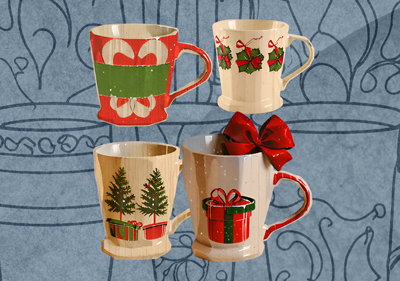
This is less about decoration and more about presence. A gift that sits on a shelf or hangs on a wall occupies mental space in a way consumables and hidden items don’t. A hand-thrown ceramic mug from a local studio, a framed print of a place you once talked about visiting, a small desk sculpture that feels oddly personal—these settle into the background of daily life and keep reappearing, while a box of chocolates or a neatly packed gadget is enjoyed once and then quietly disappears. The display gift gets noticed in passing. It gets rearranged, dusted, occasionally admired. And every time it is seen, it quietly reactivates the act of giving.

Research
Psychologists have long studied how repeated exposure shapes our preferences and emotional associations. The “mere exposure effect,” first explored by Robert Zajonc, suggests that people tend to develop a preference for things they encounter frequently. A displayable gift benefits from this effect. It’s not just liked at the moment of unwrapping—it becomes more liked over time, simply because it remains visible. 1
There’s also a social dimension. Displayed objects are rarely private. They sit in shared spaces, visible to guests, family members, even passing acquaintances. In that sense, a displayable gift does something most gifts don’t: it becomes part of how someone presents themselves to others. A well-chosen object signals taste, interests, or affiliations. A vintage film poster might hint at a love for cinema. A minimalist desk accessory suggests order, restraint. Even something as small as a quirky mug on a shelf can signal a sense of humor.
This overlap between gift and identity is subtle but powerful. People are not just receiving an object—they are receiving something that can be incorporated into how they are seen. That’s one reason aesthetic appeal plays such a strong role in gift selection. It’s not about decoration for its own sake; it’s about how an object fits into the visual story someone is already telling about themselves.
Consider a simple scenario. Two friends give you gifts on your birthday. One gives you a box of premium chocolates. The other gives you a small, well-designed desk sculpture. The chocolates might be appreciated more in the moment—they’re indulgent, sensory, immediately enjoyable. But within a week, they’re gone. The sculpture, on the other hand, stays on your desk. You glance at it during work, move it aside when you need space, maybe even adjust its position without thinking. Over time, it becomes part of your environment. The friend who gave it remains quietly present in your daily life.
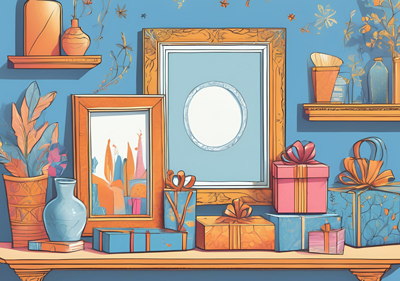
The same dynamic plays out in more personal contexts. A framed photograph, for instance, doesn’t just display an image, it anchors a memory in a physical space. It invites revisiting. Unlike digital photos, which require deliberate effort to open and scroll through, a framed image asks nothing. It simply exists, and in doing so, it keeps a moment alive.
Research
There’s a related concept in consumer psychology known as “extended self.” The idea, introduced by Russell Belk, is that people use possessions to extend and express their identity. Displayable gifts fit neatly into this framework. They are not just owned; they are incorporated. A bookshelf filled with carefully chosen objects says something about a person in a way a drawer full of items does not.2
This is where the distinction between practical and meaningful gifts becomes less clear than it seems. People can deeply appreciate a practical gift such as electronics or a kitchen appliance but it often disappears into function. It’s used, not seen. A displayable gift, even if less “useful,” operates differently. Its value lies in being noticed, both by the recipient and by others. It leans toward symbolic value rather than functional value, which is why it often feels more personal.
That doesn’t mean all displayable gifts succeed. Visibility cuts both ways. An object that doesn’t align with someone’s taste or space becomes harder to ignore. Instead of quietly integrating, it stands out for the wrong reasons. This is why people are often cautious about displaying certain gifts. They don’t want to feel obligated to exhibit something that doesn’t feel like “them.” The same mechanism that makes displayable gifts powerful also makes them risky.
A second scenario makes this clearer. Imagine receiving a bold, brightly colored painting that clashes with your otherwise neutral living room. It’s thoughtful, perhaps even expensive (Which matters less than you think), but it demands attention in a way that feels intrusive. You might hesitate to hang it, not out of ingratitude, but because it disrupts the environment you’ve curated. In this case, the gift’s visibility becomes a liability.

On the other hand, when a displayable gift aligns well, it can feel almost inevitable, as if it was always meant to be there. A well-chosen object doesn’t just sit in a space, it completes it. This is why people often remember and appreciate gifts that “fit” more than those that impress in isolation.
There’s also a question of time. Most gifts have a clear peak during the moment they’re opened, admired, reacted to and then they slowly slip out of view. Displayable gifts behave differently. They rarely steal the show in that first instant, but they linger. A framed print gets glanced at every morning, a ceramic piece catches your eye in passing, a small object on the desk becomes part of your day without asking for attention. What they lose in intensity, they make up for in staying power.
This helps explain why certain categories of gifts such as art prints, decorative objects, personalized items consistently feel meaningful. They are not just received; they are lived with. They become part of daily life in a quiet, ongoing way.
It also explains why people sometimes underestimate the impact of these gifts when choosing them. The immediate reaction can be misleading. A flashy, consumable gift might generate more excitement in the moment, but it rarely leaves a lasting trace. A displayable gift, even if understated, has a different kind of staying power.
This shifts how we think about what makes a gift “good.” Most advice leans on usefulness or surprise. Both matter. But visibility adds something else: continuity. A gift that remains in sight keeps participating in everyday life. It doesn’t end at the handover; it extends into the days that follow.
That continuity shapes meaning. What something means isn’t fixed in the moment it’s given, it builds through repeated contact. A displayable gift has the advantage here. It’s seen, adjusted, moved slightly, noticed again. Over time, it gathers associations. The object itself becomes less important than the role it plays.
You can see this in something as simple as a wooden keepsake box. At first, it’s just a thoughtful object, placed on a shelf without much intention. Then it starts to collect things—a movie ticket, a folded note, a receipt from a good day. Gradually, it shifts. It’s no longer just a box from someone; it becomes a container of moments. The gift stretches beyond what it was at the start and begins to hold a small, evolving history.
The practical takeaway isn’t to chase decoration for its own sake, but to understand what visibility actually does. A gift that stays in sight has the chance to linger and be part of the room, part of the routine, part of how someone sees their own space. It doesn’t need to announce itself. It just needs to belong.
Which shifts the task. It’s less about finding something impressive, and more about finding something that feels at home in the recipient’s world. Something they’ll place without thinking twice, and keep there without ever feeling the need to put away.

Article Sources
1. Moreland, R. L., & Topolinski, S. (2010). The mere exposure phenomenon: A lingering melody by Robert Zajonc. Emotion Review, 2(4), 329-339.
2. Belk, R. W. (1989). Extended self and extending paradigmatic perspective. Journal of consumer research, 16(1), 129-132.

Dattaraj Pai
I’m the founder of Science of Gifts, a website dedicated to helping people find meaningful and thoughtful gifts. With years of experience researching the psychology of gift-giving, I explore how gifts communicate emotions, strengthen relationships, and create lasting memories.
Beyond writing about gifts, I have a background in storytelling and filmmaking, which fuels my passion for exploring the cultural impact of meaningful gestures.