

Why Minimalist Gifts Often Feel More Premium
Minimalist gifts often feel more expensive than they are. Discover how simplicity, design, and perception shape the way we value gifts.


I’ve noticed something about myself over time. The gifts I end up caring about aren’t the ones that try to do everything. They’re usually the simpler ones. A clean, well-made object with nothing extra tends to stick around longer than something loaded with features or decoration. It’s not always the most exciting thing to unwrap. But it’s the one I keep using. It just slips into my day.
At some point I started wondering why. Why does something minimal, sometimes almost plain, feel more expensive? More thought through. More finished.
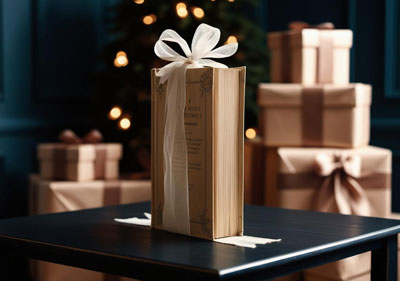
You can usually tell before the wrapping even comes off. One gift sits quietly in its box. No loud branding. No clutter. Another shows up trying a bit harder. Bright colors, extra features, maybe even a list of what it can do printed right on it. Oddly, it’s the quieter one that feels premium.
Minimalist gifts have a kind of weight to them, even when they’re light. A plain leather wallet. A matte ceramic mug. A watch with a bare dial. They don’t announce themselves, but they’re often perceived as better than things that offer more. More features, more detail, more visible effort.
The idea, if there is one, is simple: minimalism signals intention. And intention, especially with gifts, reads as value.

Research
Research suggests that people tend to perceive objects as more appealing when they’re easier to process visually—a concept known as processing fluency (Reber, Schwarz & Winkielman, 2004). When something looks clean and uncomplicated, the brain doesn’t have to work as hard to understand it, and that ease often gets interpreted as quality. 1
When something is stripped down, it suggests that what’s left was chosen carefully. There’s nowhere to hide. No distractions. So there’s this quiet assumption. If it’s this simple, it must be deliberate.
Psychologists talk about something called processing fluency. It’s basically how easy something is to take in. Simple objects are easier for the brain to process. And that ease doesn’t feel neutral. We tend to read it as a good sign. Quality. Trust. Even beauty.
So when something looks clean and uncomplicated, it doesn’t just look better. It feels better to look at. And that feeling spills over into how we judge the object itself. Aesthetics Matter.
Minimalist design leans on this. It doesn’t ask much of you. You see it, you get it. No effort required. That kind of clarity can easily be mistaken for refinement.
There’s also restraint. Doing less, in a lot of contexts, reads as confidence. A brand that doesn’t fill every inch with features or decoration feels more sure of itself. The same thing happens with gifts. A minimalist object doesn’t seem like it’s trying too hard. It just assumes it deserves your attention.
Research
Research has also shown that restraint and understated choices can signal confidence and higher status when they appear intentional (Bellezza, Gino & Keinan, 2014). In that sense, minimalism doesn’t just simplify an object—it suggests that nothing extra was needed to justify its presence.2
And then there’s the symbolic side. Simpler objects leave more room. They don’t tell you how to feel about them or how to use them. You project your own meaning onto them. Which, strangely, can make them feel more personal, even when they’re not.
Take a notebook. One is sleek and unbranded. Good paper, neutral cover, nothing extra. Another is covered in graphics, quotes, compartments. The second one offers more, technically. But the first often feels more considered. It leaves space. It doesn’t impose.
That absence of imposition can feel almost respectful. And that reads as sophistication.
This shows up in the tension between practical and meaningful gifts. Practical ones justify themselves with features. What they can do. Minimalist ones shift the focus. Less about utility, more about what it feels like to own and use them.
Imagine two desk accessories. One organizes everything. Pens, cables, notes, even your phone. The other holds just a few essentials. The first is more functional. No question. But it can feel busy. The second does less, but it does it cleanly. It suggests not everything needs optimizing. That restraint can feel, oddly, more luxurious.
There’s research around this idea of “less but better.” People tend to associate simplicity with higher status, especially when it looks intentional. When something feels minimal by design, not by limitation, it signals choice. Not compromise.
You see it in pricing too. Minimalist products are often assumed to cost more, even when they don’t. The lack of obvious features creates a kind of ambiguity, and people tend to fill that gap with assumptions of quality.
There’s also a social angle. Minimalist objects blend in. They don’t dominate a space. So they’re more likely to stay out, to be used, to stick around. Loud, heavily designed objects might grab attention at first, but they can start to feel out of place over time.
And that affects how we value them. Quiet objects are easier to live with. They don’t compete with everything else in the room. Over time, that makes them feel more valuable than things that once stood out but now feel dated.
Think of a simple watch. Thin, neutral, no branding on the face. At first it might seem underwhelming. But over time, it becomes a constant. It goes with everything. It never feels like too much. Its value reveals itself slowly.
Compare that to a watch that tries to do everything. Multiple dials. Bold colors. Visible complexity. It’s impressive at first. Then, maybe, a bit tiring.
Minimalism stretches out a gift’s appeal. It avoids that spike of excitement followed by a quick drop-off. Instead, it just stays steady.
There’s a parallel here with symbolic versus functional gifts. Functional ones peak when you use them. Symbolic ones build meaning over time. Minimalist gifts sit somewhere in between. They’re usable, but open enough to take on meaning as you live with them.
They don’t overwhelm you with what they are. They leave room for what they might become.
Of course, this can go wrong. If something feels simple by accident, like something is missing rather than intentionally removed, it doesn’t work. It feels incomplete, not refined.
So the “premium” feeling doesn’t really come from minimalism itself. It comes from what it suggests. That someone chose to include only what matters, and had the discipline to leave the rest out.
With gifts, that matters more. A gift is never just an object. It’s a signal. When something feels carefully edited, it suggests thought. Not just picking the thing that offers more, but picking the thing that feels right.
It’s a small distinction. But people notice.

Article Sources
1. Reber, R., Schwarz, N., & Winkielman, P. (2004). Processing fluency and aesthetic pleasure: Is beauty in the perceiver’s processing experience?. Personality and social psychology review, 8(4), 364-382.
2. Bellezza, S., Gino, F., & Keinan, A. (2014). The red sneakers effect: Inferring status and competence from signals of nonconformity. Journal of consumer research, 41(1), 35-54.

Dattaraj Pai
I’m the founder of Science of Gifts, a website dedicated to helping people find meaningful and thoughtful gifts. With years of experience researching the psychology of gift-giving, I explore how gifts communicate emotions, strengthen relationships, and create lasting memories.
Beyond writing about gifts, I have a background in storytelling and filmmaking, which fuels my passion for exploring the cultural impact of meaningful gestures.